An isotonic saline spray is usually the simplest option for everyday nasal hygiene and mild dryness. A hypertonic spray may temporarily draw more water from swollen nasal tissue, although it can sting more. A nasal-rinsing device uses a larger volume and is mainly useful when you want to flush out mucus, crusts or allergens more thoroughly. None of these saline products is guaranteed to shorten a cold: the practical choice depends on comfort, rinsing volume and cost per use.
This is a timely comparison. In its 23 October 2026 update, the ECDC reports that respiratory illness activity in Europe remains low but is showing the expected seasonal increase. It is therefore useful to understand the non-medicated options before automatically reaching for a medicated decongestant spray.
Isotonic, hypertonic and nasal rinse: what changes?
Isotonic saline for gentle, regular use
An isotonic solution has a salt concentration close to that of body fluids. It rinses and moisturises without a pronounced decongestant action. The Belgian Centre for Pharmacotherapeutic Information describes isotonic saline as a suitable symptomatic option for nasal congestion. In young children in particular, it is preferred to a vasoconstrictor. Always follow the age guidance and directions for the individual product.
Sterimar Seawater Nasal Spray was listed at €9.89 when checked. If you prefer a larger can with a stronger jet, Physiomer Normal Jet 210 ml was €20.60. Do not compare shelf price alone: volume, delivery system and likely number of uses all affect value.
Hypertonic spray for a more noticeably blocked nose
A hypertonic solution contains more salt than body fluids. Through an osmotic effect, it may temporarily help reduce swelling and loosen thick mucus. That can feel useful when the nose is congested, but hypertonic saline may also sting or feel more drying than an isotonic spray. Stop if it causes clear irritation.
Sterimar Hypertonic Nasal Spray 100 ml cost €8.90 at the time of checking. A direct price comparison with a 210 ml isotonic can would be misleading. Consider the pack size, expected applications and your purpose: gentle moisturising or temporarily more intensive rinsing.
A nasal-rinsing device for higher-volume flushing
A nasal rinse or nasal douche moves much more solution through the nasal cavity than a fine spray. It takes slightly more preparation, but may be helpful when you want to clear thick mucus, dust or allergens. Use only the water and salt specified in the instructions. Careful cleaning is essential with a reusable device.
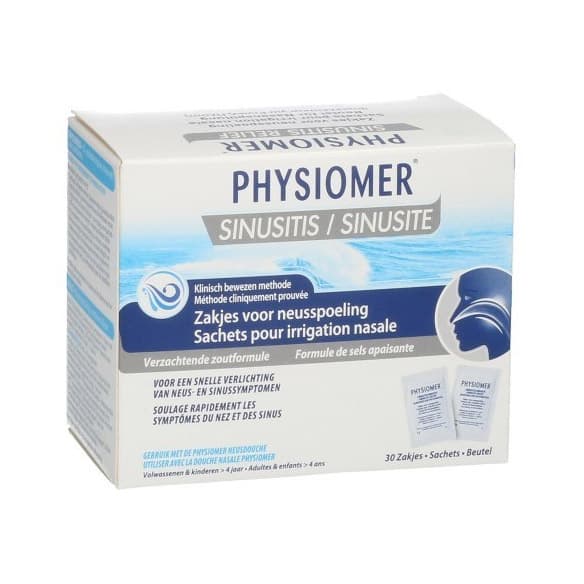
The Rhino Horn Blue Nasal Rinser was available from two sellers from €12.50, with a €1.25 difference at the time of our check. For refills, compare the Physiomer Nasal Rinse Salt Sachets 30, then listed at €13.00. Check compatibility before buying: products intended for the same purpose do not necessarily fit the same system.
How to compare saline products fairly
Start with when and how you will use the product. A compact spray is convenient for occasional moisture. A hypertonic spray may suit a more congested feeling. A nasal rinse is designed for a fuller flush, but refill costs must be included.
Then compare four practical points:
- Total cost: a reusable rinser has an upfront price plus suitable salt sachets or solution.
- Price per ml or use: a larger container can offer better value despite costing more initially.
- Delivery method: fine mist, pressurised jet and nasal douche are not interchangeable experiences.
- Age and instructions: use an age-appropriate product for children and ask a pharmacist when uncertain.
Prices change, and delivery fees can alter the final total. The figures above are snapshots from 24 October 2026. Always check the product page for the current seller, listed price and delivery terms.
Saline spray is not a medicated decongestant
Depending on their regulatory status, saline products are consumer products or medical devices. They are not the same as a medicated spray containing an ingredient such as xylometazoline. The BCFI guidance on xylometazoline limits nasal vasoconstrictors to five days because of risks including rebound congestion. These medicines are not suitable for everyone. Ask a pharmacist or doctor for advice during pregnancy, with chronic illness, for a child or when combining treatments.
Seek medical advice for serious breathing difficulty, swelling around the eyes, persistent high fever, severe pain, rapidly worsening symptoms or symptoms that last unusually long.
Conclusion: compare volume, comfort and total cost
Choose isotonic saline for gentle moisture, hypertonic saline for a temporarily stronger effect on a blocked feeling, and a nasal rinse when you want a higher-volume flush. Compare pack size and refill costs rather than the headline price alone. PharmaCompare lets you check current prices and sellers for these nasal-care products before ordering.